Do you need new radiators for an air source heat pump?
Not necessarily. Some existing radiators can heat a home comfortably with an air source heat pump; others need to be larger or replaced. The answer depends on how much heat each room loses and how much warmth its radiator can deliver when the heating water is cooler than it was with a boiler.
That makes a room-by-room assessment more useful than a blanket rule. A small bedroom may keep its current radiator while a large living room needs an upgrade. Before you budget for replacing every radiator, ask for the figures behind the recommendation.
Why radiator size matters with a heat pump
A boiler can send relatively hot water around the heating system. An air source heat pump usually works more efficiently when it supplies water at a lower temperature. Energy Saving Trust says heat pumps often send radiator water at around 35 to 45°C. A radiator gives off less heat when the water inside it is cooler, even if the radiator itself has not changed.
To warm the same room at that lower water temperature, the system may need more radiator surface area. It may also run for longer periods, giving a steadier level of warmth rather than short bursts of very hot radiators. A radiator feeling cooler to the touch does not, by itself, mean the room is being underheated.
How do you know whether your existing radiators are big enough?
The starting point is a heat loss calculation for each room. An installer considers the room’s size, windows, walls, insulation and the indoor temperature you want. They then compare that heat demand with the output of the radiator already fitted at the proposed heat pump water temperature.
A radiator that comfortably served a boiler is not automatically suitable at a lower temperature. Equally, one that was generously sized in the first place may be fine. The assessment should identify specific rooms and radiators, rather than treating the whole house as one number. Our air source heat pump service explains how system design and sizing fit into an installation.

Can you keep some radiators and replace others?
Yes. A mixed approach is often sensible. If a radiator can meet its room’s heat demand at the design temperature, there is little reason to replace it solely because the heat source is changing. Rooms with greater heat loss may need a different emitter.
Ask the installer to mark each radiator as suitable or in need of an upgrade, with the reason beside it. That gives you a clear scope for the work and avoids paying for changes that do not improve the design.
Does a bigger radiator need more wall space?
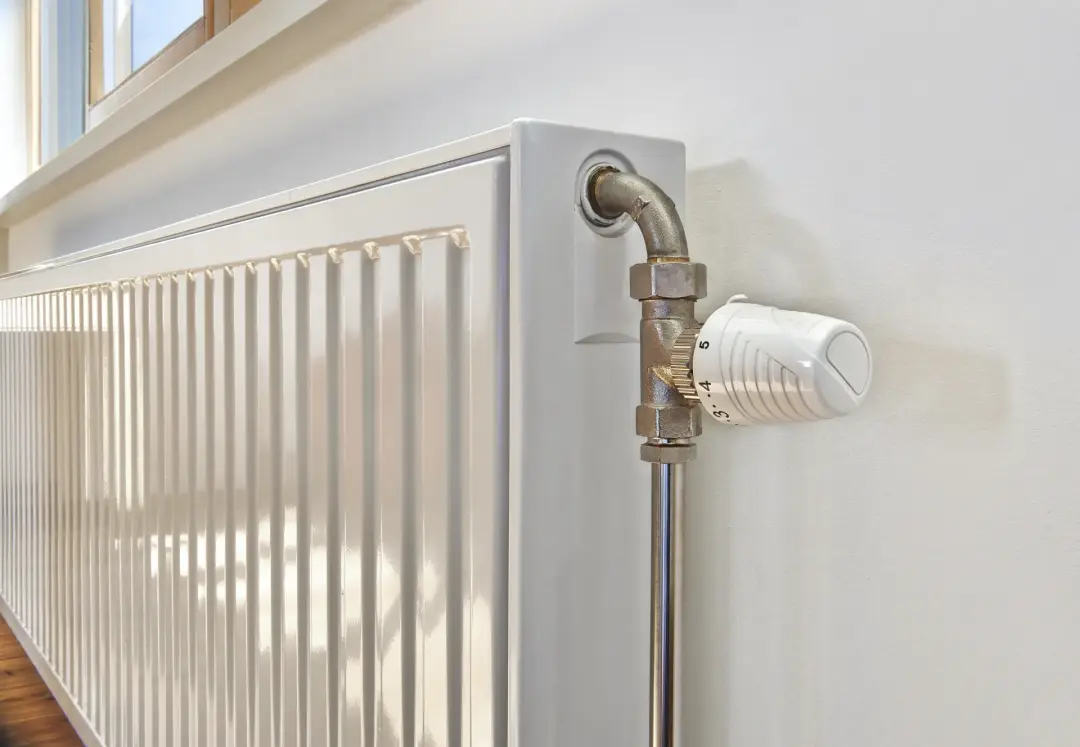
Not always. “Bigger” means more heat-emitting surface, not necessarily a longer panel. A double or triple panel radiator can provide more surface area within much the same wall width as a single panel model. In some rooms a taller or wider radiator may be the simplest answer; where space is tight, the designer can discuss other suitable emitters.
Appearance and furniture placement still matter. A radiator tucked behind a sofa or heavy cover may struggle to warm the room as intended. The right option balances calculated output with a position that lets warmth circulate.
Insulation can change the answer
Radiators only need to replace the heat a room loses. Better loft or wall insulation, improved glazing and draught reduction can lower that demand. In some homes, planned insulation work changes which existing radiators are large enough for the new system.
Tell the installer about improvements you are committed to making, and ask whether the calculations assume they are already in place. It is risky to size the system around insulation that may never be fitted. If you are planning a wider heating refurbishment, our central heating service covers the radiators and pipework as well as the heat source.

What about pipework and cold weather?
Radiator output is only one part of the design. Existing pipes must also carry enough water to the emitters, and the installer should check their size, condition and layout. A new radiator will not solve a room that receives too little flow.
The system should be designed to keep rooms comfortable on a cold day, not just in mild weather. That is why the room-by-room figures and the chosen water temperature matter. Ask how the proposed radiators perform at the winter design conditions used in your quote.
Could underfloor heating be an alternative?
Underfloor heating spreads warmth across a large surface, so it can work well with the lower water temperatures often used by heat pumps. It may be worth considering when a floor is already being lifted during a renovation. It is not a requirement: properly sized radiators can also work well.
Changing a finished floor adds work and disruption, so compare the full installation rather than the emitter alone. Our underfloor heating page outlines that option if you are planning a larger project.
For more information on alternate options, check out our comparison between air source heat pumps and gas boilers
Why not just turn up the heat pump temperature?
Raising the water temperature can make an undersized radiator give off more heat, but it can also make the heat pump work less efficiently. Relying on a higher setting to avoid every radiator change may therefore shift the cost from installation to running the system.
The right balance varies by property. A good design considers radiator upgrades, insulation, comfort and expected performance together. Ask for the proposed flow temperature and for an explanation of any room that needs a higher temperature than the rest.
What should you ask before agreeing to the work?
Request the heat loss and radiator output for each room, the water temperature used in the design, and a list of which radiators can stay. For every suggested replacement, ask what output is needed and whether a double or triple panel model could fit the existing space. Ask whether pipework or insulation work is included in the quote.
The useful answer is neither “replace them all” nor “keep them all”. It is a plan that shows how each room will reach a comfortable temperature. Our air source heat pump installation service explains what an assessment covers.